
CHICAGO DISTRIBUTION CENTER - 5510
The Composer Embalmed
Quantity:
Pickup available at Juilliard Store
- Publisher: University of Chicago Press
Choose options
Quantity:
Pickup available at Juilliard Store
Quantity:
Pickup available at Juilliard Store
Relic Culture from Piety to Kitsch
The first granular study of nineteenth-century composer devotion—a network of devotees who preserved tangible traces of composers through relics, rituals, pilgrimage, exhumation, and embalming.
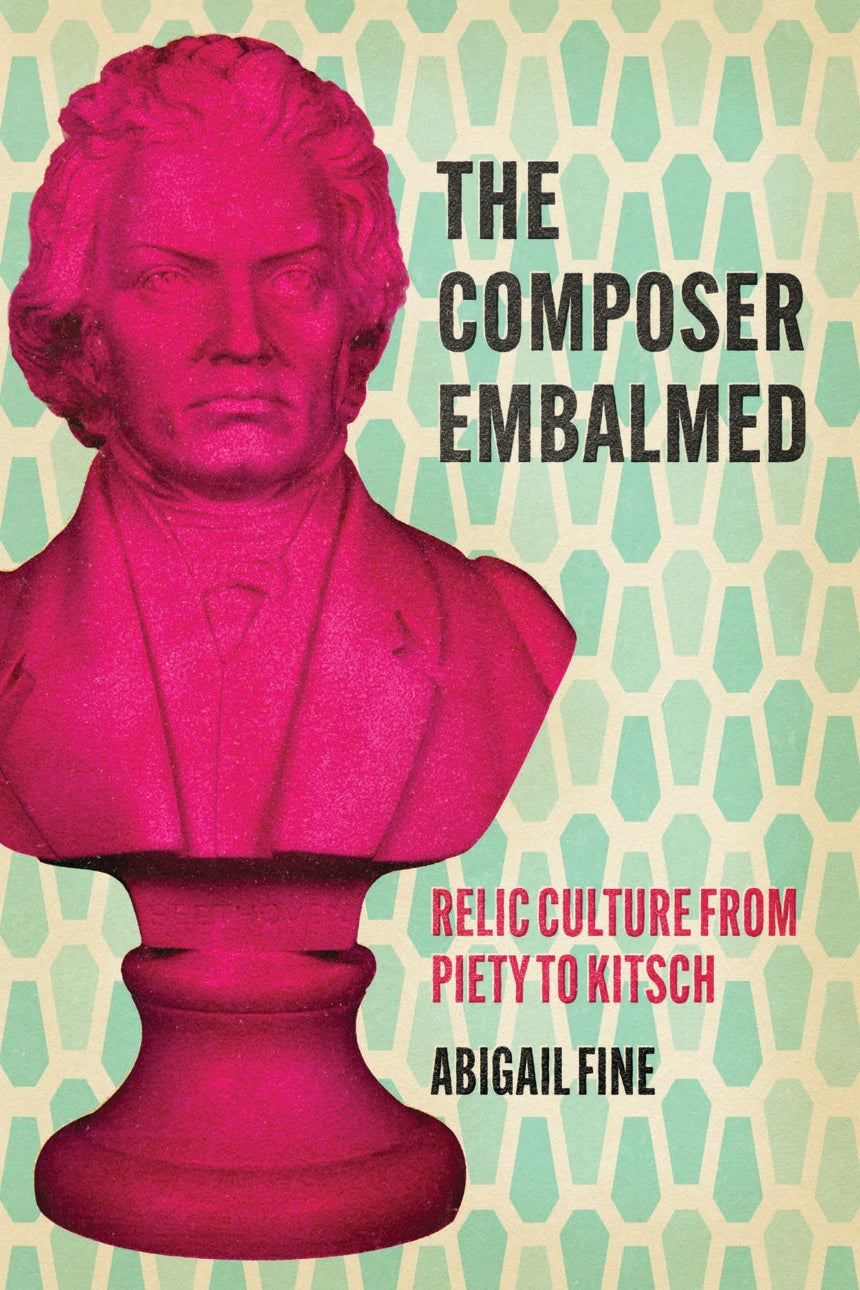
During the nineteenth century, music institutions promoted artworks they deemed timeless and made composers into figureheads of a lasting Western canon. Alongside this institutional face of the canon was a more intimate impulse to preserve, touch, and embrace the residues of the dead. In Germany and Austria between 1870 and 1930, music lovers venerated the bodies, houses, and belongings of composers as relics, shrines, and talismans. In The Composer Embalmed, Abigail Fine documents the vernacular and eccentric ways that composers have been remembered.
Fine navigates a wealth of unknown archival material to recover the stories of devotees: from pilgrims who felt time stop in historic houses to music-loving doctors who made skulls into sacred specimens, dilettantes who displayed Beethoven’s mask as a relic of the “beautiful death,” and interwar critics of those dilettantes who disparaged piety as a false religion, a kitsch replica. In isolation, these practices may look like simple acts of affection. But in the aggregate, Fine asserts, acts of devotion constituted what we might broadly understand as relic culture—a culture that sought to possess the body of the departed genius, and that superimposed habits of anthropological collecting onto artifacts of Austro-German heritage. By excavating objects, ephemera, amateur lyric, visitors’ books, letters, and travelogues, The Composer Embalmed reveals the underbelly of the canon, where guilty pleasures blur the boundary between sanctity and desecration.
During the nineteenth century, music institutions promoted artworks they deemed timeless and made composers into figureheads of a lasting Western canon. Alongside this institutional face of the canon was a more intimate impulse to preserve, touch, and embrace the residues of the dead. In Germany and Austria between 1870 and 1930, music lovers venerated the bodies, houses, and belongings of composers as relics, shrines, and talismans. In The Composer Embalmed, Abigail Fine documents the vernacular and eccentric ways that composers have been remembered.
Fine navigates a wealth of unknown archival material to recover the stories of devotees: from pilgrims who felt time stop in historic houses to music-loving doctors who made skulls into sacred specimens, dilettantes who displayed Beethoven’s mask as a relic of the “beautiful death,” and interwar critics of those dilettantes who disparaged piety as a false religion, a kitsch replica. In isolation, these practices may look like simple acts of affection. But in the aggregate, Fine asserts, acts of devotion constituted what we might broadly understand as relic culture—a culture that sought to possess the body of the departed genius, and that superimposed habits of anthropological collecting onto artifacts of Austro-German heritage. By excavating objects, ephemera, amateur lyric, visitors’ books, letters, and travelogues, The Composer Embalmed reveals the underbelly of the canon, where guilty pleasures blur the boundary between sanctity and desecration.