
Wise Music Classical
Price: String Quartet No. 2 (Score & Parts)
- Composer: Florence Price
- Editor: John Michael Cooper
- Publisher: G. Schirmer Inc.
Choose options
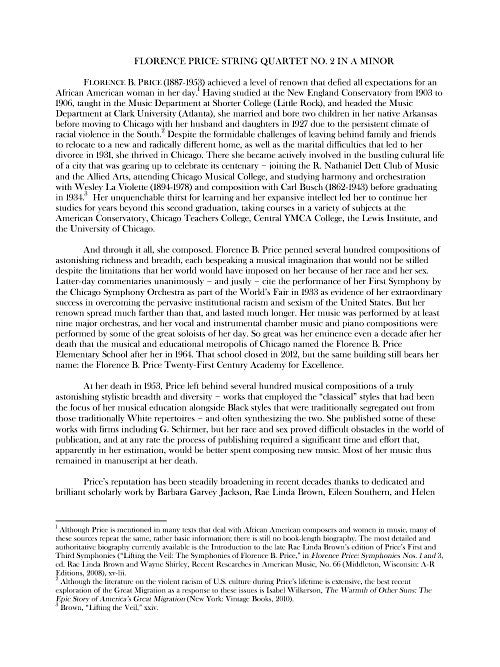
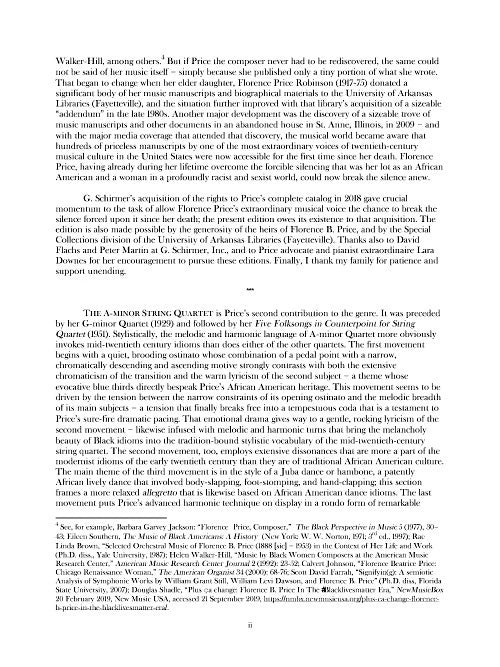
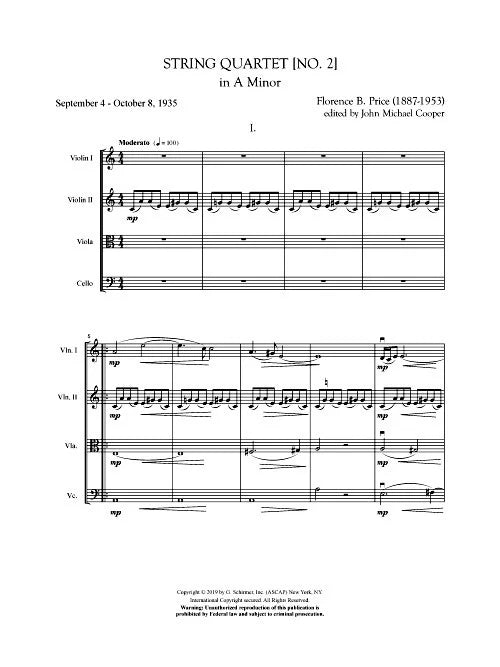
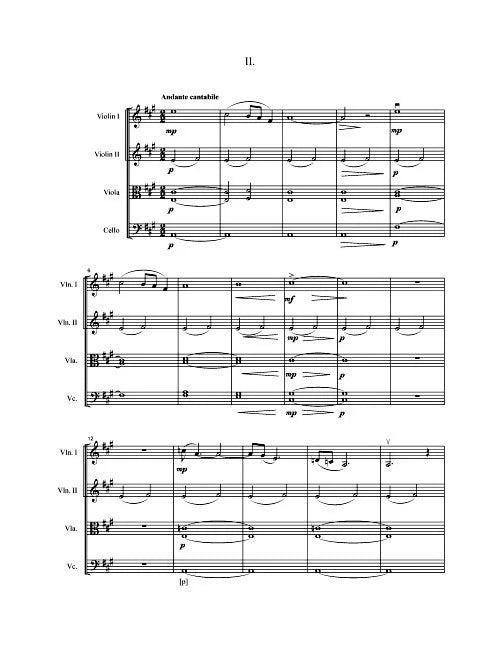
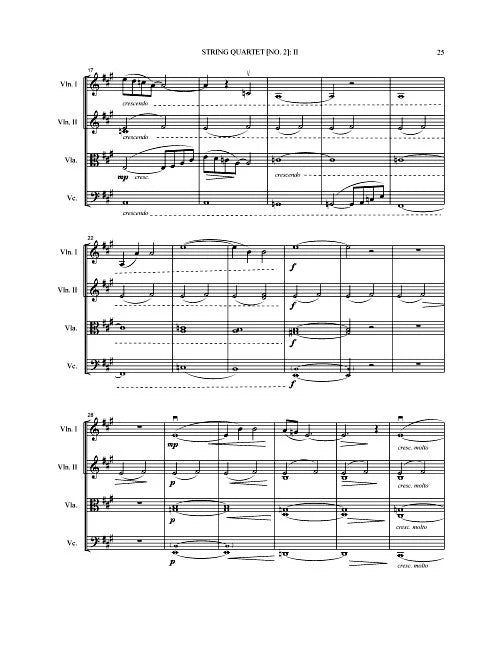
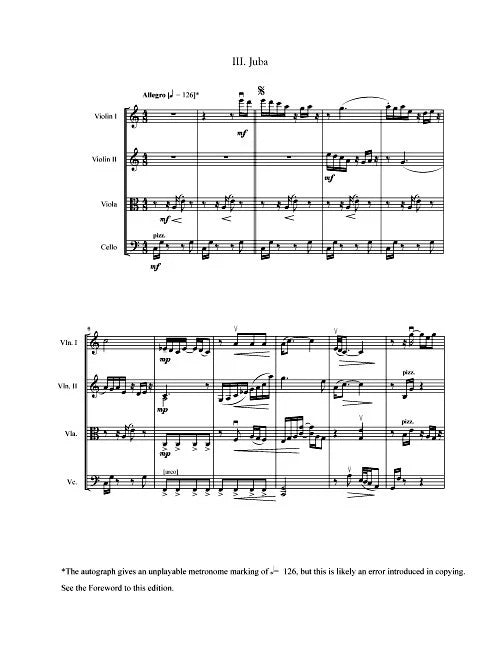
The A-minor string quartet is Florence Price's second contribution to the genre. It was preceded by her G-major quartet (1929) and followed by her Five Folksongs in Counterpoint for string quartet (1951). Stylistically, the melodic and harmonic language of A-minor quartet more obviously invokes mid-twentieth-century idioms than does either of the other quartets. The first movement begins with a quiet, brooding ostinato whose combination of a pedal point with a narrow, chromatically descending and ascending motive strongly contrasts with both the extensive chromaticism of the transition and the warm lyricism of the second subject — a theme whose evocative blue thirds directly bespeak Price's African American heritage. This movement seems to be driven by the tension between the narrow constraints of its opening ostinato and the melodic breadth of its main subjects — a tension that finally breaks free into a tempestuous coda that is a testament to Price's sure-fire dramatic pacing. That emotional drama gives way to a gentle, rocking lyricism of the second movement — likewise infused with melodic and harmonic turns that bring the melancholy beauty of Black idioms into the tradition-bound stylistic vocabulary of the mid-twentieth-century string quartet. The second movement, too, employs extensive dissonances that are more a part of the modernist idioms of the early twentieth century than they are of traditional African American culture. The main theme of the third movement is in the style of a Juba dance or hambone, a patently African lively dance that involved body-slapping, foot-stomping, and hand-clapping; this section frames a more relaxed allegretto that is likewise based on African American dance idioms. The last movement puts Price's advanced harmonic technique on display in a rondo form of remarkable emotional breadth — a variety further emphasized by the searching, quasi-improvisatory Andantino featuring the solo viola, violin, and cello in mm. 120-35 and recast, abbreviated, as an interruption including the entire ensemble in mm. 187-92.
— John Michael Cooper