
W. W. NORTON & COMPANY - 393
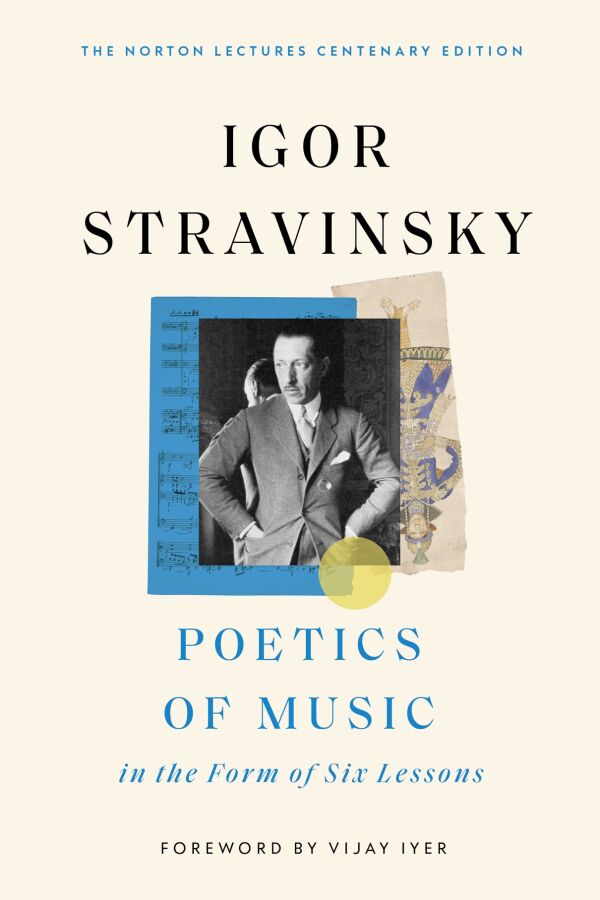
Poetics of Music in the Form of Six Lessons
- Author: Igor Stravinsky
- Publisher: Harvard University Press
Choose options
Translated by Arthur Knodel and Ingolf Dahl
Timeless lessons on the pleasures of listening, the dilemmas of composition, and the meaning of artistic freedom from a founder of musical modernism.
In October 1939, Igor Stravinsky took the stage at Harvard not as a conductor but as a speaker. Invited to deliver the prestigious Norton Lectures, he had departed Europe just days after the outbreak of war, leaving behind not only a growing political maelstrom but also his life in France, where his wife, eldest daughter, and mother all had died in the previous year.
Poetics of Music offers a snapshot of this pivotal moment in the composer’s biography and career. Delivered at the height of his neoclassical period, which blended the sculptural precision of classicism with distinctively twentieth-century cadences, Stravinsky’s lectures explore both the creative potential and the constraints of tradition. Though he achieved artistic immortality as a genre-defying experimentalist who scandalized audiences in Belle Époque Paris, the Stravinsky we find here is more circumspect, defending the dignity of formal conventions against the more anarchic currents of modernist experimentation. Tradition, he argues, is not a relic of a bygone past but a living force that animates the present. And true artistic freedom emerges not only in moments of revolutionary inspiration but also through strict deference to the formal requirements of the work.
Like his compositions, Stravinsky’s lectures are ambitious and at times bombastic, punctuated by wit and polemic. Ranging widely from the phenomenology of rhythm to the fate of high culture in the Soviet Union, he invites us to reflect on what it is in music that compels us, whether we are hearing one of his polytonal works or a simple birdsong.