
BARENREITER - 345062
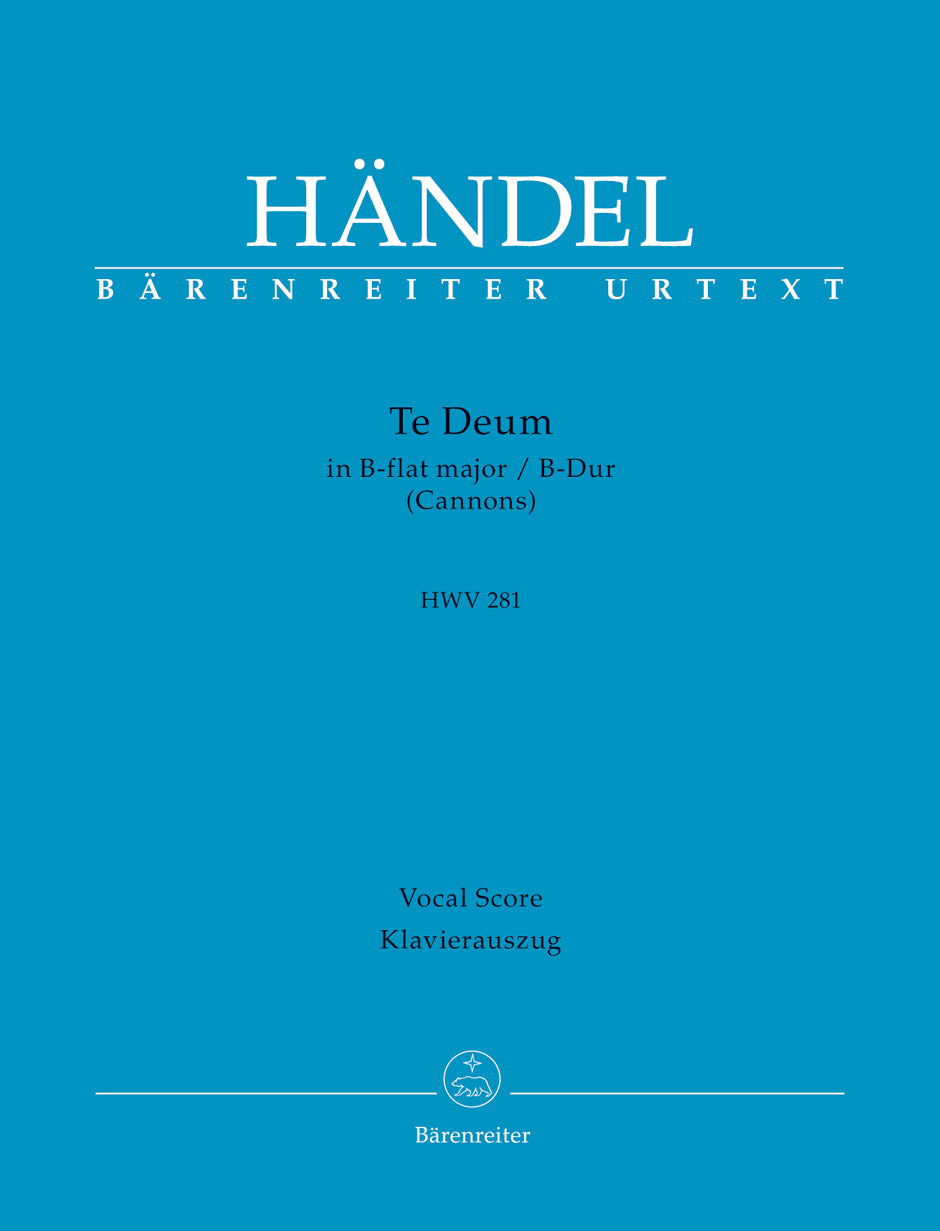
Handel Te Deum B-Dur HWV 281 (Cannons)
CURTAIN CALL · 20% OFF
This copy has spent time on our shelves and may show light wear, such as minor scuffs, bent corners or fading. Discount applied at checkout. All Curtain Call sales are final.
See all Curtain Call- Composer: Frideric Handel George
- Publisher: Bärenreiter
- Format: Choral Score
- Binding: Paperback
- Dimensions: 10.6 in x 7.5 in
- Pages: 101
Choose options
CURTAIN CALL · 20% OFF
This copy has spent time on our shelves and may show light wear, such as minor scuffs, bent corners or fading. Discount applied at checkout. All Curtain Call sales are final.
See all Curtain CallCURTAIN CALL · 20% OFF
This copy has spent time on our shelves and may show light wear, such as minor scuffs, bent corners or fading. Discount applied at checkout. All Curtain Call sales are final.
See all Curtain CallEditor: Beeks, Graydon
Arranger: Köhs, Andreas
Orchestral scoring : Mixed Choir(STTTB),Recorder,Ob,Trp,2V,Bassi(Vc,Db,Org)
Language(s) of work: EN
Language(s) of text: English
Product format: Vocal score , Urtext edition
Binding: paperback
Pages / Format: VII, 101 S. - 27,0 x 19,0 cm
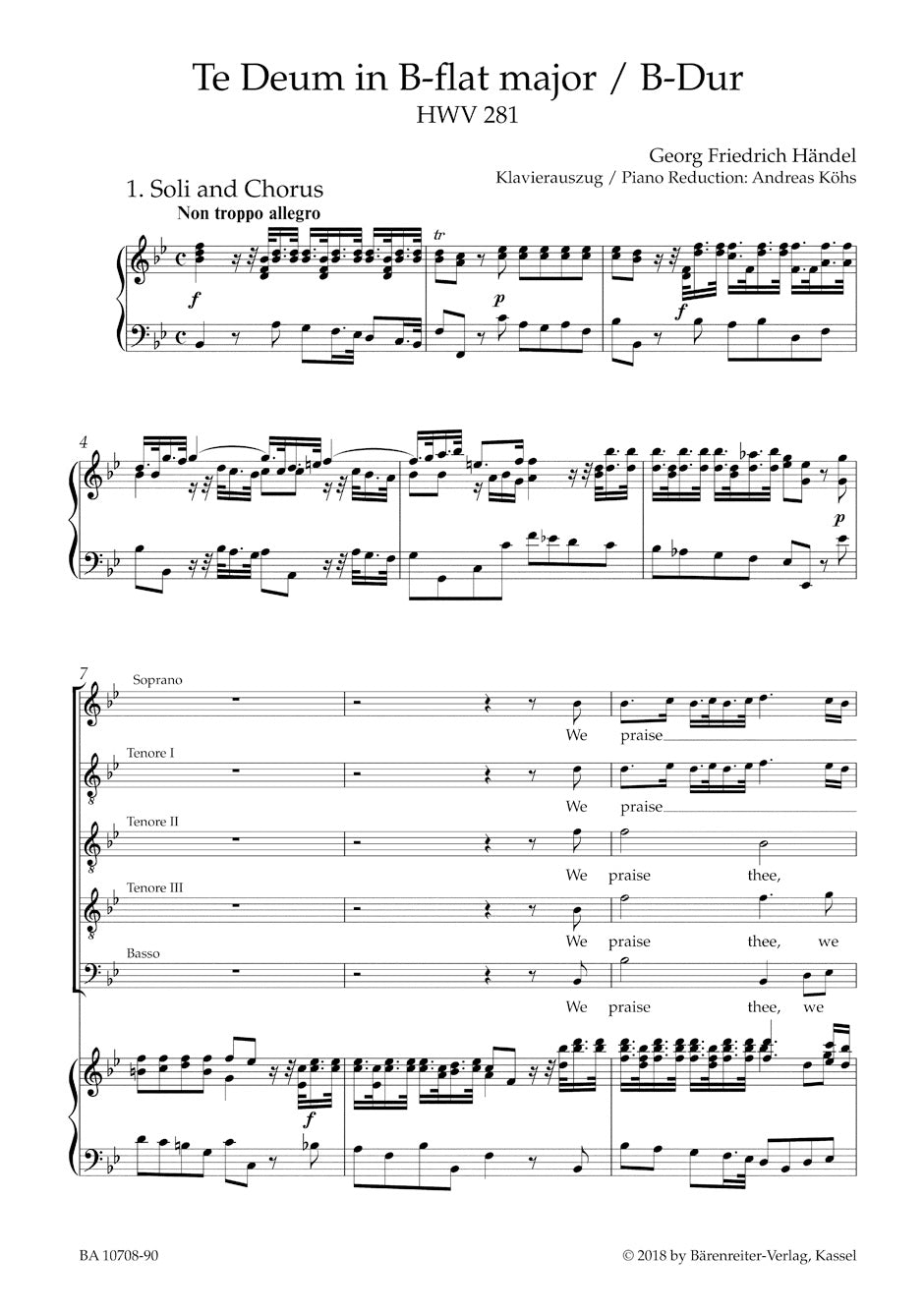
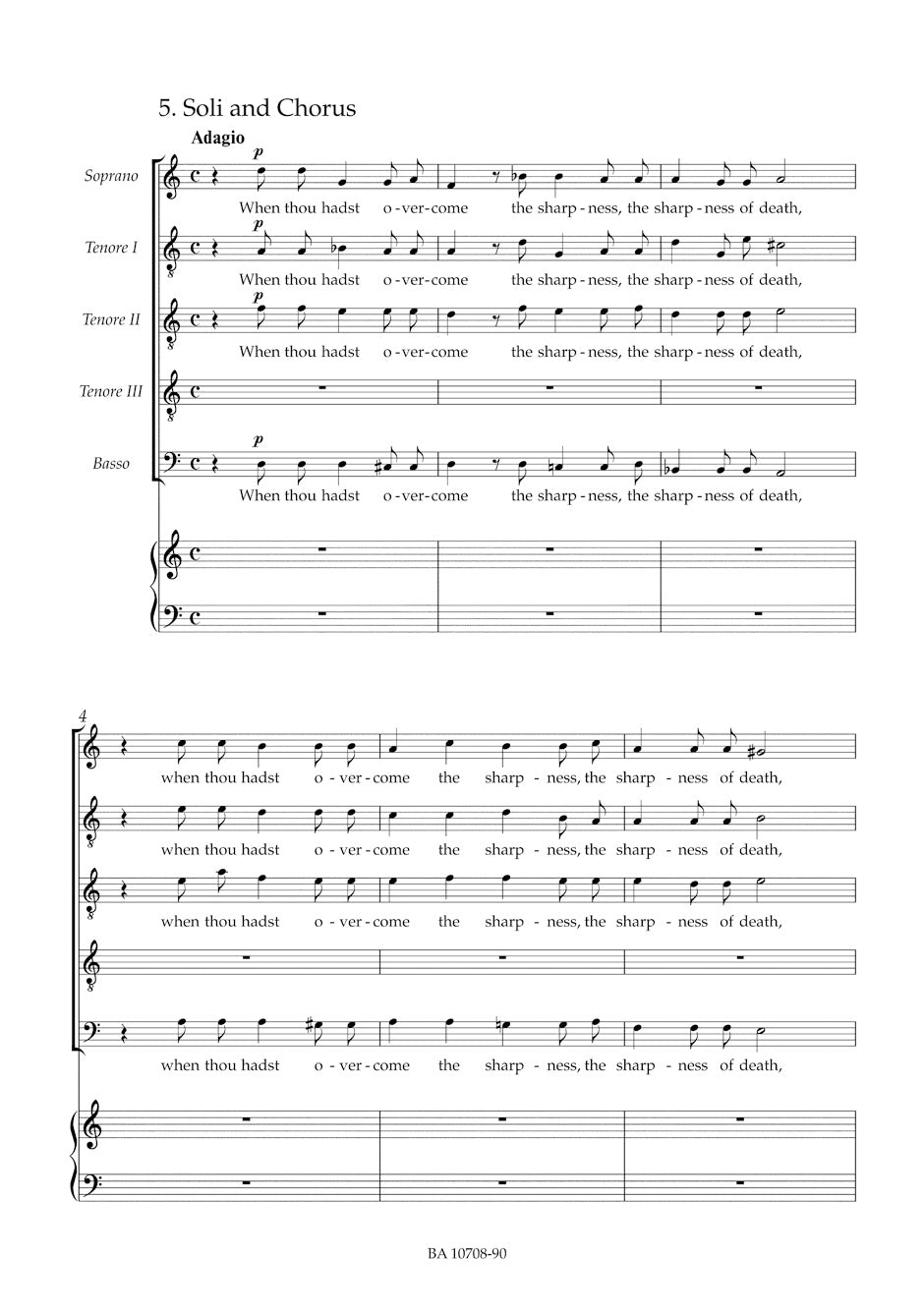
Handel composed the “Te Deum” in B-flat major HWV 281 in 1718 for the future Duke of Chandos, hence its nickname “Chandos Te Deum”. Here it is called “Te Deum for Cannons” after the Duke’s stately home named Cannons where the first performance took place. The unusual scoring for flute, oboe, bassoon, trumpet, two violins and basso continuo plus a choir (one soprano, three tenors and a bass) probably reflects the musicians which were available at Cannons, bearing in mind that three tenors were used also in “Acis and Galatea”, the masque which was composed at almost the same time. Though in many respects this “Te Deum” is reminiscent of the “Utrecht Te Deum”, its smaller forces tend to give it more the character of chamber music. This edition is based on the Urtext from the “Halle Handel Edition” (BA 10708), which offers the first complete scholarly text of the music for the “Te Deum”.