
BARENREITER - 345062
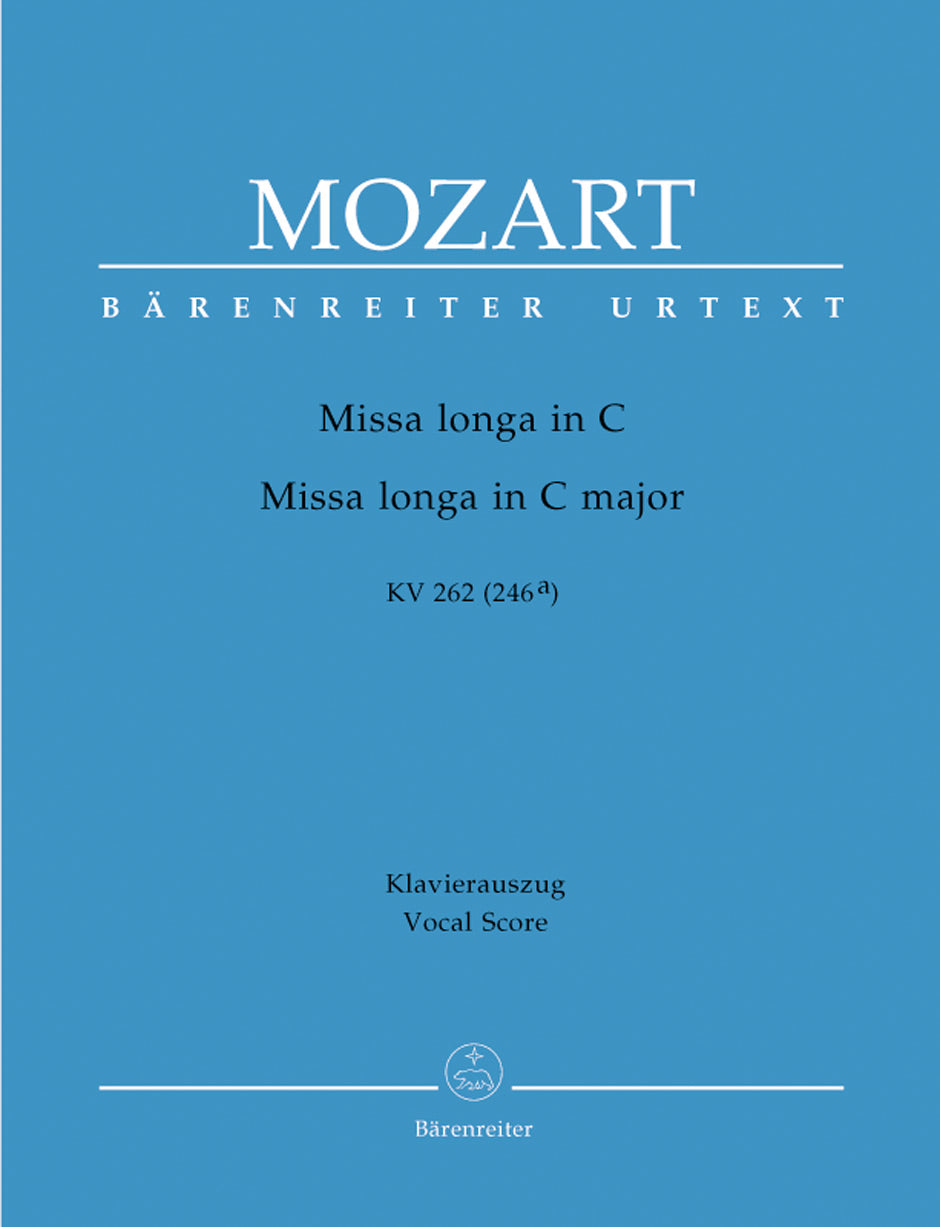
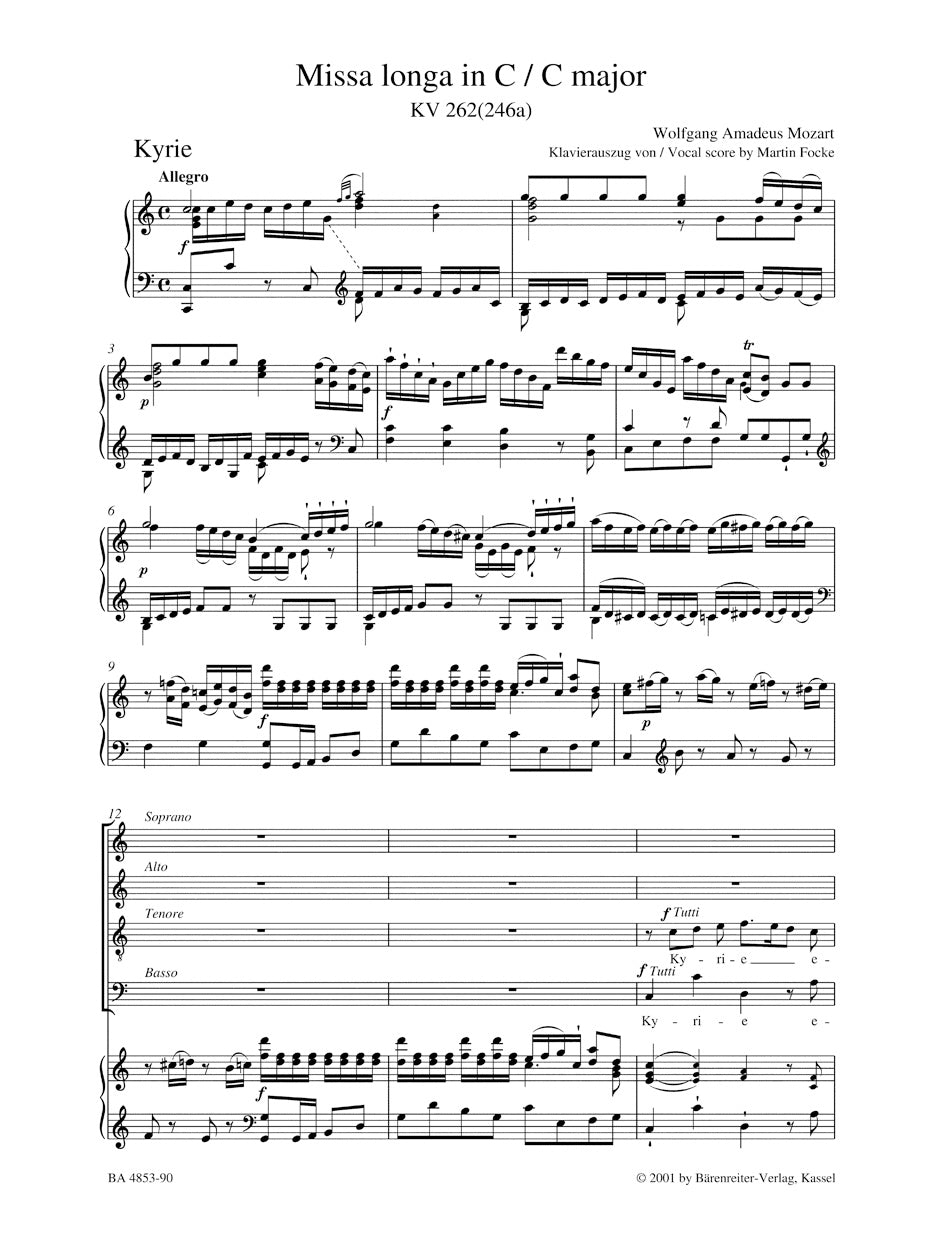
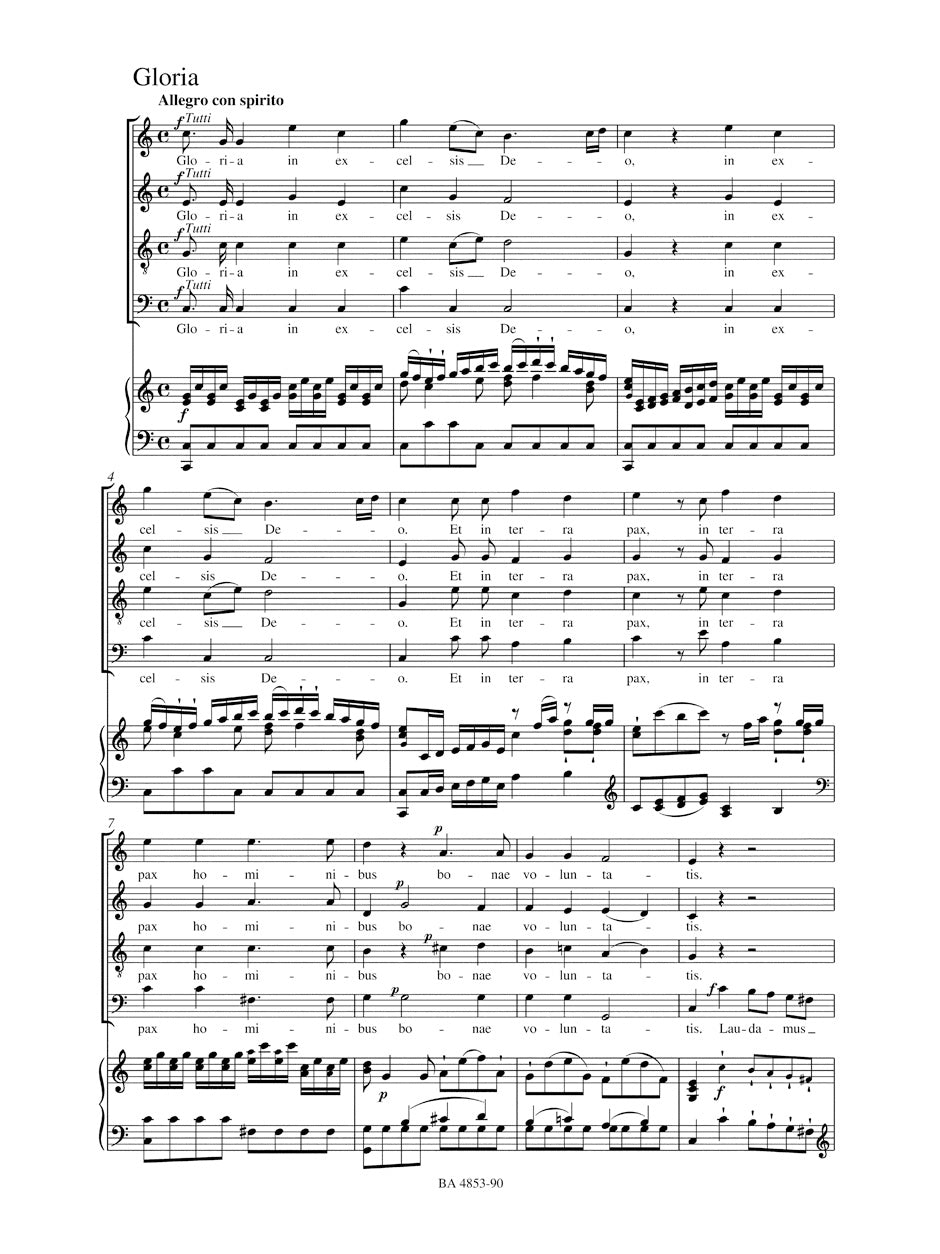
Mozart Missa longa C major K. 262 (246a)
CURTAIN CALL · 20% OFF
This copy has spent time on our shelves and may show light wear, such as minor scuffs, bent corners or fading. Discount applied at checkout. All Curtain Call sales are final.
See all Curtain Call- Composer: Wolfgang Amadeus Mozart
- Publisher: Bärenreiter
- Format: Choral Score
- Binding: Stapled
- Dimensions: 10.6 in x 7.5 in
- Pages: 66
Choose options
CURTAIN CALL · 20% OFF
This copy has spent time on our shelves and may show light wear, such as minor scuffs, bent corners or fading. Discount applied at checkout. All Curtain Call sales are final.
See all Curtain CallCURTAIN CALL · 20% OFF
This copy has spent time on our shelves and may show light wear, such as minor scuffs, bent corners or fading. Discount applied at checkout. All Curtain Call sales are final.
See all Curtain CallEditor: Senn, Walter
Arranger: Focke, Martin
Orchestral scoring : SSolo/ASolo/TSolo/BSolo/Mixed choir-SATB/2Ob/2Hn/2Trp/3trombone/timpani/2V/Bassi(Violoncello/Basso/bassoon)/Org
Language(s) of work: L
Language(s) of text: L
Product format: vocal score, Urtext edition
Binding: Stapled
Pages / Format: 66 - 27,0 x 19,0 cm
The monumentality of the Missa longa suggests that the work was written for a particularly solemn occasion. When scanning for outstanding ecclesiastical events in the 1770’s, one cannot ignore the consecration of Ignaz Josef Count Spaur, coadjutor and administrator of the diocese of Brixen, as titular bishop of Chrysopel on 17 November 1776 in the Salzburg cathedral. Erich Schenk claims that Leopold Mozart’s mention of Wolfgang’s “Spaur Mass” in a letter of 28 May 1778 was in reference to the consecration of Ignaz Josef Spaur, an old friend of the Mozart family. Mozart’s work would then have to be seen as an homage of a truly personal nature. The Missa longa is the only setting of the Ordinary from this period which is appropriate to such a highly solemn event.