

BOYDELL & BREWER - CASEMATE - 2750419
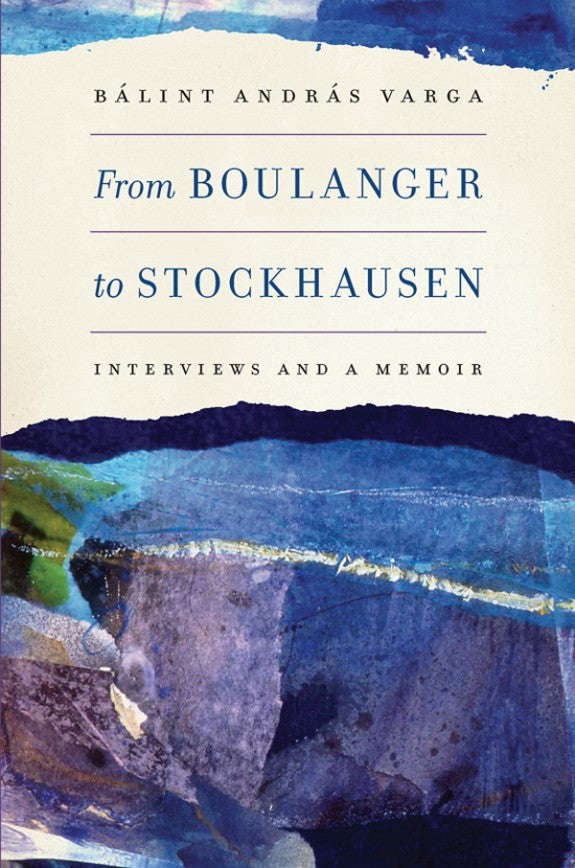
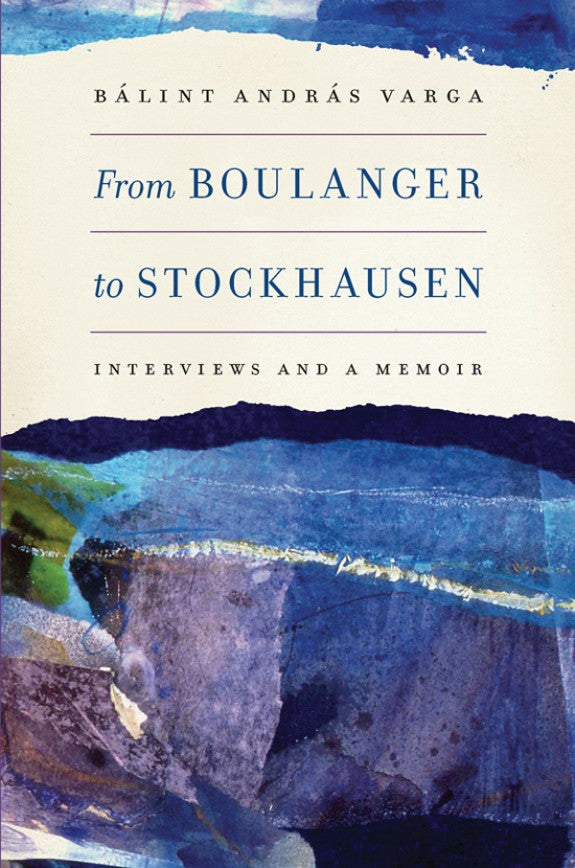
From Boulanger to Stockhausen: Interviews and a Memoir
THIS IS A SHELF FIND
Now at a reduced price. This copy may show light shelf wear such as minor scuffs, bent corners or fading.
See all Shelf Finds
Quantity:
Pickup available at Juilliard Store
- Author: Bálint András Varga
- Publisher: BOYE6
Choose options
THIS IS A SHELF FIND
Now at a reduced price. This copy may show light shelf wear such as minor scuffs, bent corners or fading.
See all Shelf Finds
Quantity:
Pickup available at Juilliard Store
THIS IS A SHELF FIND
Now at a reduced price. This copy may show light shelf wear such as minor scuffs, bent corners or fading.
See all Shelf Finds
Quantity:
Pickup available at Juilliard Store
Bálint András Varga makes available here for the first time in English nineteen extended interviews with some of the most notable figures in music from the past fifty years, as well as lively snippets from interviews Varga conducted with thirteen other equally renowned musicians. The interviewees include singers Elisabeth Schwarzkopf and Cathy Berberian; pianists Alfred Brendel and Arthur Rubinstein; violinists Isaac Stern and Yehudi Menuhin; conductors Claudio Abbado and Sir Neville Marriner; composers György Ligeti and Karlheinz Stockhausen; and legendary pedagogue Nadia Boulanger. Of special interest is an interview with the reclusive composer György Kurtág, here published for the first time in any language.
From Boulanger to Stockhausen concludes with a poignant memoir by Varga of his experiences growing up in a Jewish family in Hungary during World War II and the early years of Communist rule. Varga's recollections also include details about his many interviews with some of these remarkable musicians, and about his employment at the Hungarian state radio station and then in the music-publishing industry, which brought him to, among other places, Vienna, where he now lives.
From Boulanger to Stockhausen concludes with a poignant memoir by Varga of his experiences growing up in a Jewish family in Hungary during World War II and the early years of Communist rule. Varga's recollections also include details about his many interviews with some of these remarkable musicians, and about his employment at the Hungarian state radio station and then in the music-publishing industry, which brought him to, among other places, Vienna, where he now lives.