

OXFORD UNIVERSITY PRESS - 19
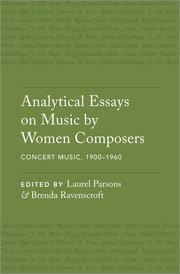
Analytical Essays on Music by Women Composers: Concert Music, 1900–1960
CURTAIN CALL · 20% OFF
This copy has spent time on our shelves and may show light wear, such as minor scuffs, bent corners or fading. Discount applied at checkout. All Curtain Call sales are final.
See all Curtain Call- Editors: Brenda Ravenscroft, Laurel Parsons
- Publisher: Oxford University Press
Choose options
CURTAIN CALL · 20% OFF
This copy has spent time on our shelves and may show light wear, such as minor scuffs, bent corners or fading. Discount applied at checkout. All Curtain Call sales are final.
See all Curtain CallCURTAIN CALL · 20% OFF
This copy has spent time on our shelves and may show light wear, such as minor scuffs, bent corners or fading. Discount applied at checkout. All Curtain Call sales are final.
See all Curtain CallEdited by Laurel Parsons and Brenda Ravenscroft
Through musical analysis of compositions written in the first half of the twentieth century, Analytic Essays on Music by Women Composers: Concert Music, 1900-1960 celebrates the achievements of eight composers: Alma Mahler-Werfel (1879-1964), Rebecca Clarke (1886-1979), Dame Ethel Smyth (1858-1944), Ruth Crawford (1901-53), Florence B. Price (1887-1953), Galina Ustvolskaya (1919-2006), J. M. Beyer (1888-1944), and Peggy Glanville-Hicks (1912-90). Written by outstanding music theorists and musicologists, the essays provide thought-provoking in-depth explorations of representative compositions, often linking analytical observations with questions of meaning and sociohistorical context. Each essay is introduced by a brief biographical sketch of the composer by editors Laurel Parsons and Brenda Ravenscroft.
This collection - Volume 2 in an unprecedented four-volume series of analytical studies on music by women composers - is designed to challenge and stimulate a wide range of readers. For academics, these thoughtful analytical essays can open new paths into unexplored research areas in the fields of music theory and musicology. Post-secondary instructors may be inspired by the insights offered in these essays to include new works in music theory and history courses at both graduate and upper-level undergraduate levels, or in courses on women and music. Finally, for soloists, ensembles, conductors, and music broadcasters, these detailed analyses can offer enriched understandings of this repertoire and suggest fresh, new programming possibilities to share with listeners.